
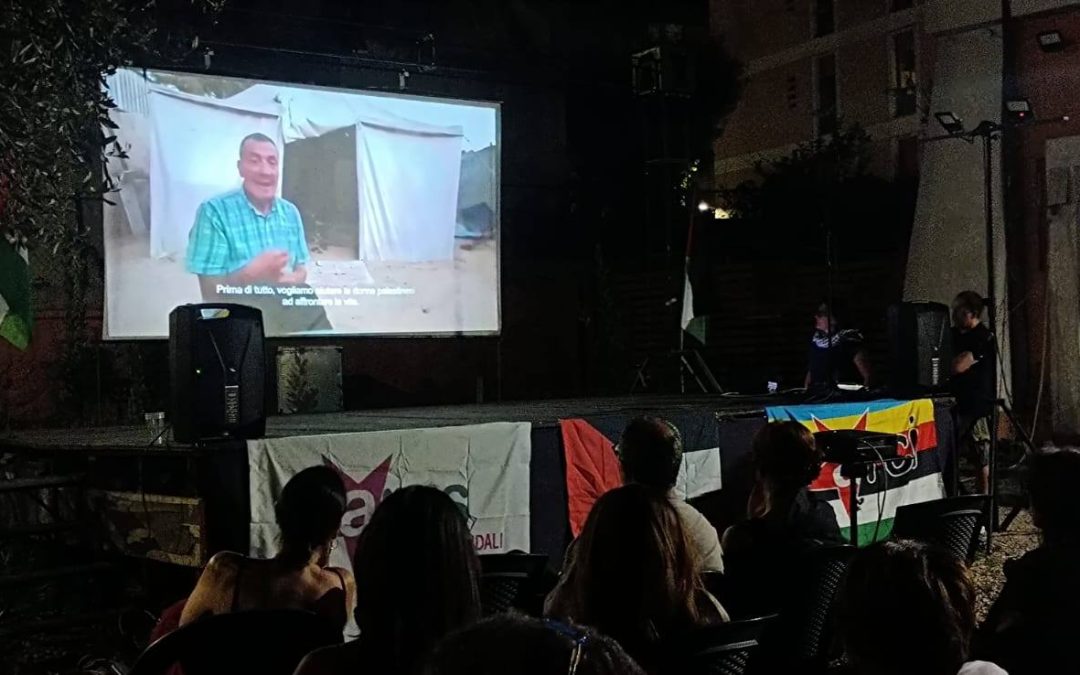
A cinematic and poetry evening was held in Rome as an expression of solidarity with Gaza and Beirut and as an effort to preserve collective memory. The event reaffirmed that art cannot remain silent in the face of suffering and injustice.
The evening supported two cultural initiatives dedicated to the culture of resistance. The first was the Gaza International Women’s Film Festival, whose inaugural edition will take place in Gaza from October 26 to October 31, 2025, under the slogan “Honorable Women in a Time of Genocide.” The second initiative focused on supporting the reopening of the historic Le Colisée Cinema in Beirut.
Presentation of the Gaza International Women’s Film Festival
Professor Alessandra Micuzzi introduced the Gaza International Women’s Film Festival, a project established in Gaza by its founder and president, Dr. Ezzedeen Shallah, with the support of an international network of artists and activists.
The festival aims to highlight the experiences of Palestinian women and provide a platform for them to tell their stories through cinema. It seeks to transform personal narratives into films that preserve memory, document reality, and promote cultural resistance.
Message from Dr. Ezzedeen Shallah
A video message from Dr. Ezzedeen Shallah was screened during the event. In his remarks, he explained the importance of establishing a film festival dedicated to Palestinian women in Gaza.
He noted that many women have lost family members and now face life under extremely difficult circumstances. According to Dr. Shallah, Palestinian women have numerous stories and issues that deserve international attention, making the festival an essential platform for discussing and documenting their experiences through cinema.
Screening of a Documentary Film
The audience also watched the documentary short film “Born from Death” (1981) by German filmmaker Monica Maurer.
The film documents the massacre that took place on July 17, 1981, in Palestinian refugee camps in Lebanon and serves as a powerful testimony to historical events and collective memory.
Poetry as an Act of Memory and Resistance
During the evening, a group of poets gave voice to texts that refuse silence. Their readings formed a collective expression of memory, resistance, and solidarity.
The program included readings of:
- Ragazza Ardente – The Global Appeal by Mariangela Gualtieri
- Il Nemico by Davide Carlì and Serge Bloch
- Sotto l’Ululato della Fame by Alza Alqaisi
- A note by Etel Adnan
- Susan Abulhawa’s address at the Oxford Union
- If I Must Die by Refaat Alareer
- Excerpts from Diaries from Gaza
- Silence for Gaza by Mahmoud Darwish
- The Gambler by Mahmoud Darwish
These readings highlighted the power of words to confront silence and preserve human memory.
Messages from International Artists
The event also featured video messages from filmmaker Mathieu Hage, who reflected on the symbolic significance of Le Colisée Cinema in Lebanon.
Lebanese actress Rita Hayek contributed a moving reflection on the role of artists during times of war and crisis, emphasizing the importance of culture as a form of resistance and human connection.
Supporting Organizations
The evening was organized with the support of numerous cultural and solidarity organizations, including:
- ARCI – Italian Recreational and Cultural Association
- ARCS – ARCI Solidarity, Cooperation and Development
- UCCA – Union of ARCI Cinema Clubs
- TIRO Arts Association (Beirut)
- Audiovisual Archive of the Workers’ and Democratic Movement (AAMOD)
- Stop Re:Arm Europe
- Cultura è Libertà
- European Women’s Audiovisual Network (EWA)
Supported by an international network of artists, activists, and solidarity organizations, the event in Rome demonstrated the enduring power of art, culture, and cinema in promoting justice, memory, and resistance.
About the Gaza International Women’s Film Festival
The Gaza International Women’s Film Festival aims to empower women through cinema, promote cultural exchange, and provide a platform for films addressing women’s experiences and challenges around the world. The festival seeks to amplify women’s voices and strengthen the role of cinema as a tool for cultural dialogue and social change.

