
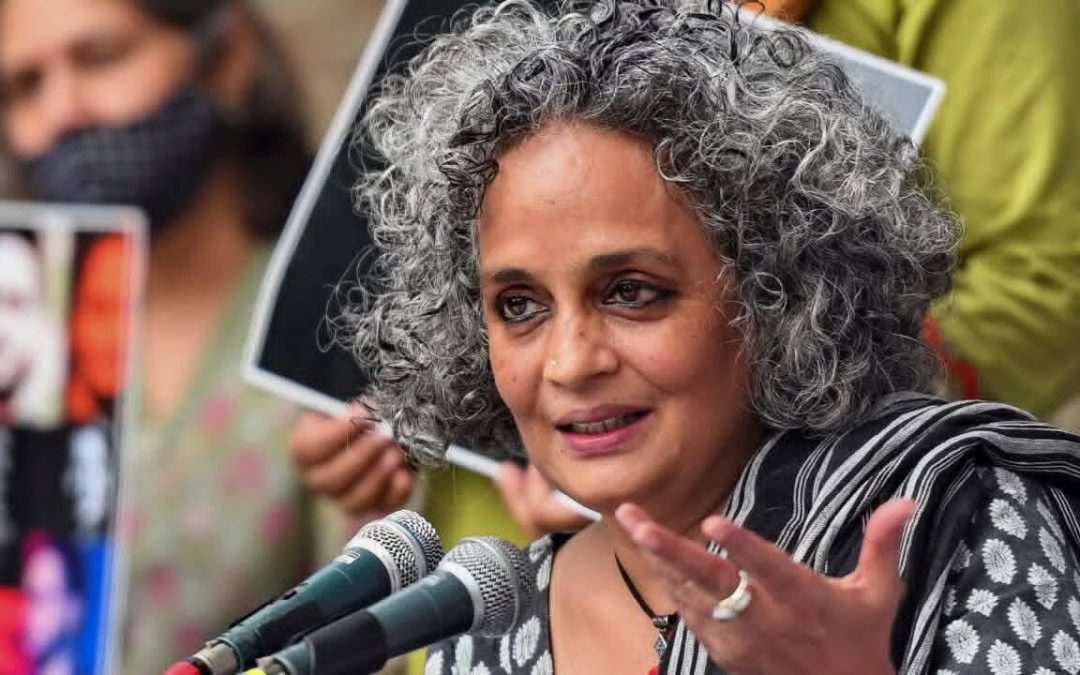
Dr. Ezzedeen Shallah, President of the Gaza International Women’s Film Festival, praised the stance of Indian writer Arundhati Roy following her withdrawal from the Berlin International Film Festival, describing her decision as a decisive moral position in the face of troubling cultural complicity and unjustified silence regarding a humanitarian crime unfolding before the eyes of the world.
Shallah stated that Roy’s action exposes the double standards within cultural institutions that claim to defend freedom of expression while avoiding condemnation of the ongoing genocide in Gaza. He emphasized that art cannot be separated from political reality when it concerns the lives and fundamental rights of peoples.
Roy’s decision came after members of the festival jury reportedly declined to comment on the situation in Gaza. Roy had been invited to present her classic film In Which Annie Gives It Those Ones as part of the festival program. However, she argued that calls to separate art from politics effectively silence discussion about an ongoing humanitarian catastrophe. In her statement, Roy stressed that artists have a responsibility to take a clear ethical stand during such historic moments before officially announcing her boycott of the festival.
Shallah added that attempts to exclude politics from artistic spaces are not acts of neutrality, but rather clear alignments with dominant power structures and direct contributions to the silencing of victims. He argued that the silence of major international festivals regarding documented crimes represents a moral failure within the global cultural landscape.
He further noted that Roy’s position recalls the historic role of intellectuals in confronting oppressive systems. Her withdrawal, he said, is not merely a symbolic act but a global protest against the normalization of violence and its justification under the guise of cultural neutrality.
Shallah concluded by reaffirming that the Gaza International Women’s Film Festival stands firmly alongside artists who use their platforms to advocate for justice, stressing that history will not look kindly upon institutions that choose silence in moments of mass suffering.

