
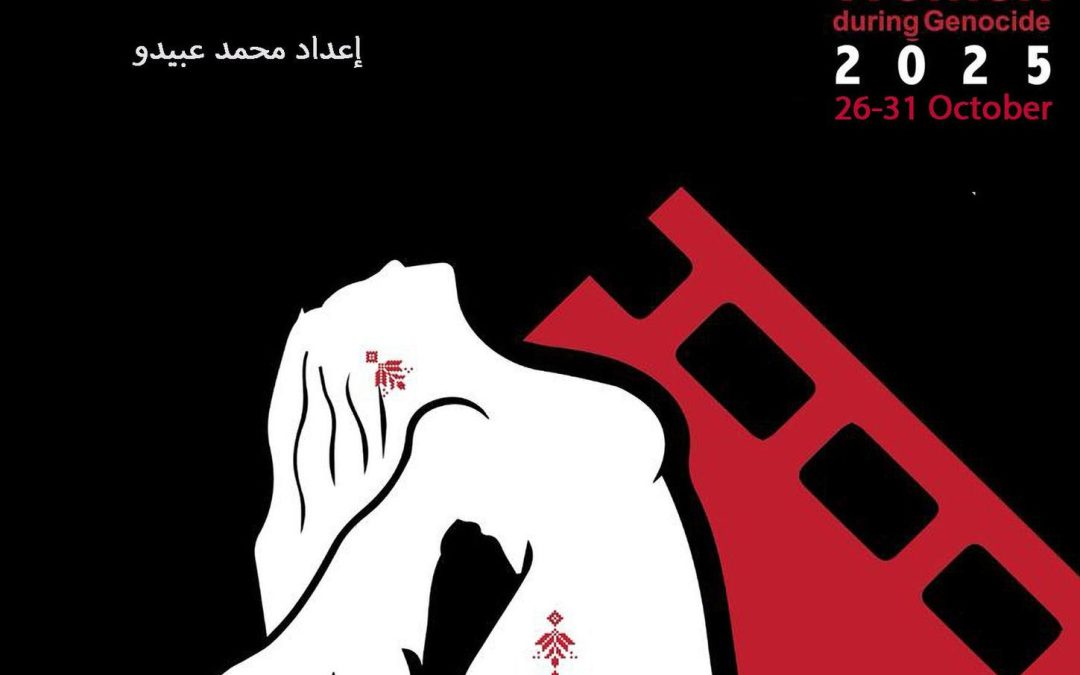
The administration of the Gaza International Women’s Film Festival, represented by its founder and president, Dr. Ezzedeen Shallah, in partnership with the Palestinian Ministry of Culture and in collaboration with film critic Mohammad Obeidou, has published the book “The Palestinian Women Directors Guide” as a culmination of the festival’s first edition, held from October 26–31, 2025, coinciding with the Palestinian National Women’s Day.
Dr. Shallah expressed his sincere gratitude to film critic Mohammad Obeidou for his dedicated efforts in producing this important publication. He emphasized that the book serves several key purposes: documenting the professional and creative journeys of Palestinian women directors, preserving the heritage of women’s cinema, highlighting the significant role of women in Palestinian filmmaking, and showcasing their achievements to create broader opportunities for them locally, regionally, and internationally.
From the moment a camera first captured a Palestinian scene in the 1930s, women were present behind the lens—active, creative, and influential—despite attempts to marginalize their role within dominant cinematic and historical narratives. Palestinian women directors have never been mere footnotes in the history of cinema; rather, they have been one of its essential pillars and authentic visual voices, reshaping the Palestinian story through a distinctly female perspective marked by awareness, defiance, and artistic beauty.
The Gaza International Women’s Film Festival, whose inaugural edition took place from October 26 to 31, sought to document the experience of Palestinian women in filmmaking through the publication of “The Palestinian Women Directors Guide and the Making of Visual Memory,” authored by film critic Mohammad Obeidou.
Since 2010, women’s participation in Palestinian cinema has moved far beyond symbolic representation. More than half of Palestinian film productions have been created by women, reflecting a significant transformation in the structure and cultural, social, and political dimensions of Palestinian cinema. This remarkable presence is reflected not only in quantity but also in quality, as women directors have demonstrated a unique ability to question reality and redefine Palestinian identity through film—not merely as a mirror of society, but as a tool for revelation, resistance, and the rewriting of history.
This book seeks to revisit these experiences and listen to the voices of women directors who have used the camera as a means of expression and a platform for exploring profound questions about identity, homeland, womanhood, and the role of cinema itself in the struggle over memory and identity.
Tracing this journey is also an exploration of the complex relationship between women and Palestinian cinema—not as subjects of representation, but as active creators who shape images and contribute to the formation of collective consciousness.
Throughout the chapters of this book, readers will encounter the works of Palestinian women directors as living testimonies to the profound transformations experienced by Palestinian society—from revolution and resistance to the details of everyday life, from love and disappointment to exile and displacement. These films are infused with deep human sensitivity, capturing the many dimensions of Palestine across time and place, while portraying the role of Palestinian women in the ongoing struggle for dignity, survival, and freedom.
What distinguishes Palestinian feminist cinema is its ability to move beyond stereotypes and develop new aesthetic languages and artistic expressions that are more profound and humane. This is especially evident in the works of women directors from within historic Palestine, whose films reflect a strong commitment to inquiry, experimentation, and innovation.
The book serves as a comprehensive guide featuring biographies and critical profiles of 62 Palestinian women directors from Palestine and the diaspora, along with analyses of their documentary and narrative films. It is an effort to document a pioneering women’s creative movement that has helped reshape Palestine’s image in global visual memory through the lenses of filmmakers who believe that cinema is not merely an artistic pursuit, but an act of resistance and beauty at the same time.

